
By Audrey Malone, LCSW, Master-Trained Accelerated Resolution Therapy Clinician
I am a trauma therapist by training, and much of my clinical work has been in areas where Accelerated Resolution Therapy is well researched and widely used. In my work with police departments, fire service professionals, military clients, and trauma survivors, ART became a staple in my practice because I saw how effective it could be in helping clients process distressing experiences without having to retell every detail.
Over the last few years, my practice has also evolved into the area of performance psychology, specifically working with athletes. As I began using ART in this space, I started noticing something important: many performance blocks were not about lack of skill, discipline, or motivation. The athlete often knew what to do. Their body simply would not let them do it under pressure.
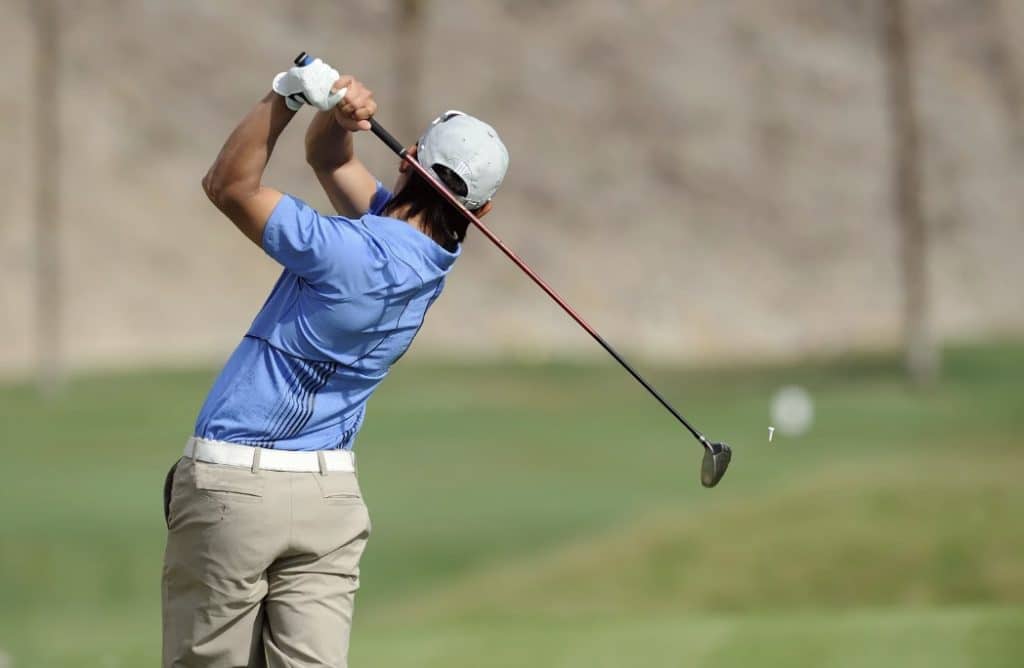
I have seen this with golfers, college athletes, and high-performing clients who come in struggling with anxiety, freezing, hesitation, overthinking, or fear of repeating a mistake. In golf, this can show up as the yips, putting anxiety, swing tension, or losing access to a movement that once felt natural.
That is where ART can be especially meaningful. ART gives clinicians a way to work directly with the images, sensations, emotions, and anticipatory fear that can sit underneath a performance block. Through eye movements, image rescripting, Voluntary Image Replacement, and performance-focused interventions, clients can reduce the emotional charge connected to past performance moments while also rehearsing a more regulated and confident future response.
The Mental Game Is Not Just Mental
Athletes are often told to push through, stay focused, trust the process, practice more, and think positively. Those tools can help, but they do not always reach the part of the nervous system that reacts before the athlete can think their way through it.
Many athletes are not lacking insight. They can explain the problem clearly. They know when it started. They know what they “should” be doing differently. But when they return to the pressure moment, the body responds first.
A golfer may know how to make the putt. A pitcher may know how to release the ball. A performer may know how to walk into the room, speak clearly, or compete with confidence. But if the nervous system has connected that moment with fear, embarrassment, failure, injury, or pressure, the body may tighten, freeze, rush, avoid, or over-control.
That is why performance anxiety is not always just a mindset issue. Sometimes it is connected to a memory, an image, a body sensation, or an old response pattern that has not yet shifted. ART gives clinicians a way to work with that material without requiring clients to retell every detail or stay stuck in the story. This is consistent with the broader ART literature, which describes ART as a brief, image-based intervention using eye movements, imaginal exposure, and rescripting to reduce emotional and physiological reactions connected to distressing experiences.
Why ART Fits Performance Work
Accelerated Resolution Therapy is often discussed in relation to trauma treatment, but its structure also makes it relevant for performance anxiety. ART uses eye movements, imaginal exposure, and image rescripting to help recondition stressful memories and reduce emotional and physical reactions connected to traumatic memories. A recent systematic review described ART as a promising, time-efficient treatment for PTSD symptoms in adults, while also emphasizing the need for more high-quality research.
ART has also been studied in military and veteran populations, including service members and veterans with PTSD symptoms who had received prior PTSD treatment. Although that research is not specific to athletes, it supports ART’s relevance in clinical settings where distressing experiences, body activation, and memory-based symptoms interfere with functioning.
This matters in performance work because athletes often carry distress through images and body responses. They may replay the missed shot, the embarrassing moment, the injury, the criticism, or the moment they froze. Even when they are not consciously thinking about it, the body may respond as if the old event is happening again.
In performance-focused ART, the work may include identifying the image, memory, or future fear connected to the performance block; using eye movements to reduce the body’s distress response; using Voluntary Image Replacement to shift the internal picture; and helping the athlete rehearse a more regulated, focused, and confident response. ART training also includes performance-focused applications, including Performance Enhancement ART interventions and approaches that address anticipatory fear, avoidance patterns, and future-oriented distress.
This is different from simply asking an athlete to visualize success or think positively. With the ART Performance Protocol, the clinician can address the distressing image, the body response, and the feared future performance moment in a structured way. That matters because many athletes are not simply trying to imagine success. They are trying to reduce the emotional charge attached to failure, pressure, or fear of repeating a mistake.
Golf, the Yips, and the Fear of Repeating the Mistake
I have had the privilege of working with elite golf athletes, and one thing I have consistently observed is that performance anxiety is rarely just about the moment in front of them. For many golfers, the pressure of a putt, swing, or tournament moment can become connected to past mistakes, public failure, injury, criticism, or the fear of losing control again.
The yips can be especially difficult because they often affect movements that once felt automatic. A golfer may freeze over a putt, jerk through a stroke, lose smoothness in the swing, or feel intense anxiety before a shot. The more the golfer tries to control the movement, the harder it can become to access rhythm and ease.
The golf-specific research on ART is still emerging, so it is important not to overstate the evidence. However, related eye-movement and reprocessing literature offers a useful clinical rationale. A recent EMDR-based case series on golfers with the yips described the yips as a task-specific movement problem and noted that anxiety may play a role for some golfers. The study reported symptom improvement in a small group of golfers, while also emphasizing the need for stronger research.
Related work has also explored EMDR-based interventions with female golfers who experienced small-t athletic traumas, recognizing that adverse sport experiences can become emotionally charged and may contribute to competitive anxiety and performance blocks.
These studies are not ART studies, and they should not be presented as proof that ART treats the yips. Still, they support a broader clinical point: when performance problems are connected to distressing images, anticipatory anxiety, emotionally charged sport experiences, or fear of repeating a mistake, eye-movement and reprocessing approaches deserve attention.
For golfers, ART may be helpful when the performance block is tied to a missed putt that became emotionally charged, fear of freezing over the ball, anticipatory anxiety before tournament play, a swing or putting movement that now feels unsafe, or pressure connected to being watched and evaluated.
I do not see ART as replacing coaching, mechanics, medical evaluation, or sport-specific training. I see it as a way to address the emotional and physiological interference that may be blocking access to the athlete’s existing skill.
Working With the Future Picture
One reason ART may be such a good fit for performance anxiety is that athletes often struggle with more than the past memory. They also struggle with the future picture.
They imagine freezing again. Missing again. Being watched again. Letting someone down again. Losing control again. That future image can create real physical activation before the event even happens.
This is where ART’s use of imagery and rescripting becomes powerful. The athlete is not just talking about what happened. They are working with what they see, feel, anticipate, and rehearse internally.
For a golfer, that may mean processing the old missed putt and then developing a new internal picture of standing over the ball with steadiness. For another athlete, it may mean reducing the fear connected to a prior injury and imagining returning to play with calm and readiness.
Recent sport psychology research also supports the importance of imagery, anxiety, and performance. Across the literature, mental toughness, sport imagery, and anxiety appear meaningfully connected to athletic performance, and imagery practice has been shown to support performance across several sport domains.
Imagery alone is not the answer for every athlete. But it does support something many ART clinicians already understand: the internal image matters. The body often responds to what the client sees, remembers, anticipates, and rehearses internally. ART gives clinicians a way to work with both the old image and the future image.
ART and the Larger Conversation in Performance Psychology
There is growing recognition that athlete mental health and performance are deeply connected. Research with elite athletes has highlighted the importance of therapists understanding both clinical care and the sport-performance context.
I think that distinction is important. Not every athlete who feels pressure has a mental health disorder. Not every performance block is trauma. But some athletes are carrying distressing experiences, body-based anxiety, and stuck emotional responses that interfere with their ability to perform.
ART gives clinicians a structured way to address that material without reducing the athlete to symptoms. It allows the work to stay practical, focused, and connected to the athlete’s goals. It also honors the reality that performance is not only cognitive. It is emotional, physical, relational, and nervous-system based.
For ART clinicians, I think performance work opens an important area of practice. It is not limited to elite athletes. It can include golfers, student athletes, performers, executives, first responders, medical professionals, and anyone whose body has learned to respond to pressure as threat.
Helping Athletes Reconnect With Confidence and Flow
Athletes are often not looking for a quick fix. They are looking for access back to themselves. They want to feel steady again. They want to trust their body. They want to step into pressure without being hijacked by the past. They want to know that one mistake does not have to define the next performance.
In performance-focused ART, the goal is not simply to improve performance. It is to help the client reduce the emotional and physiological interference that may be blocking access to already-developed skill.
That is why I believe ART belongs in the conversation about performance psychology. It helps clinicians ask a better question. Not only, “How do we help this athlete perform better?” but also, “What is the nervous system still holding, and how can we help the athlete return to trust, rhythm, and flow?”
When the body no longer has to protect against the past, confidence is not something the athlete has to force. It becomes something they can access again.
 | Audrey Malone, LCSW, is a Master-Trained Accelerated Resolution Therapy clinician and the founder of Be Well Collective in Seal Beach, Orange County, California. Her work integrates trauma-informed care, nervous system regulation, and performance psychology to help clients process painful experiences and return to greater clarity, confidence, and emotional steadiness. She is passionate about expanding the conversation around ART as a powerful approach for healing, resilience, and performance-related growth. |